
Validating the Corridors: The 7th ECOWAS Regional Trade Facilitation Committee Meets in Banjul
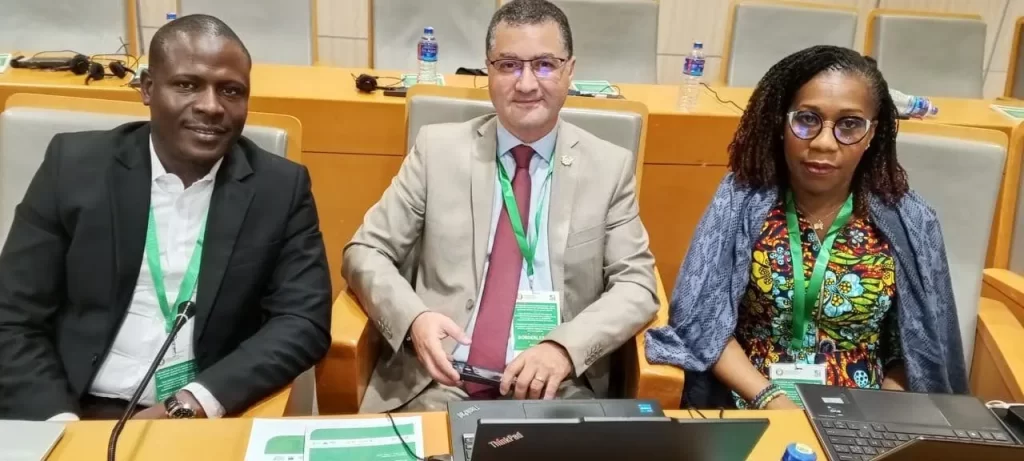
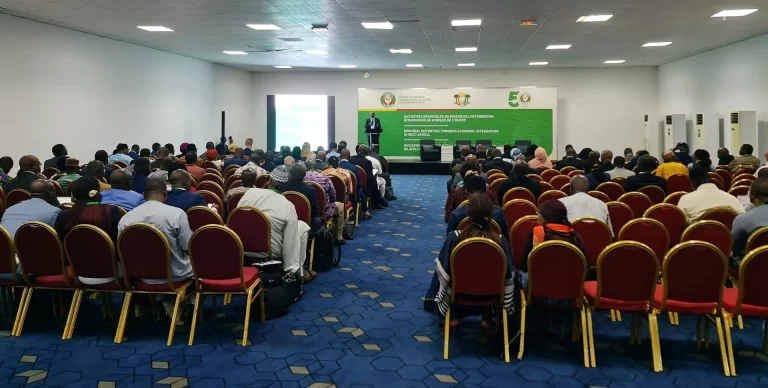
The Dawda Jawara International Conference Center in Banjul hosted the 7th Regional Meeting of the ECOWAS Regional Trade Facilitation Committee from 15 to 18 June 2026, a four-day gathering that pulled together National Trade Facilitation Committee representatives from across the bloc, customs administrations, private sector networks, civil society, and development partners, Borderless Alliance among the private sector voices present throughout.
The Regional Trade Facilitation Committee, RTFC for short, functions as ECOWAS’s mechanism for coordinating what would otherwise be fifteen separate national trade facilitation processes into something resembling a coherent regional approach. Each member state maintains its own National Trade Facilitation Committee, Ghana’s NTFC among them, documented at length elsewhere in this catalogue, and the RTFC exists to ensure those national-level bodies are not simply working in parallel but in genuine coordination with one another.
Four objectives anchored the meeting’s agenda. The first was to validate ongoing cross-border initiatives, a process of formal review and endorsement not unlike the ALCO validation workshop Borderless Alliance took part in a year earlier in Lomé, but applied here across the full sweep of ECOWAS’s regional trade facilitation portfolio rather than a single corridor’s technical report.
The second objective was to evaluate regional compliance with the World Trade Organization’s Trade Facilitation Agreement, a regional-level echo of the WTO TFA compliance work that has run consistently through Ghana’s own National Trade Facilitation Committee sessions throughout 2025 and 2026. Assessing compliance at the regional level allows ECOWAS to identify whether gaps in implementation are concentrated in particular member states or reflect shared, structural challenges across the bloc as a whole.
Addressing persistent infrastructure and non-tariff barriers formed the meeting’s third objective, a category of problem that, unlike formal tariffs, resists simple abstract resolution because non-tariff barriers frequently exist in practice rather than in law, informal checkpoints, inconsistent documentation requirements, arbitrary delays, the kind of friction that Ziad Hamoui had described at the Africa Resilience Forum months earlier as belonging to trade’s informal and illicit layers rather than its formal, measurable one.
Driving the digital transformation of corridor logistics rounded out the four objectives, connecting the Banjul meeting to a theme that has recurred throughout Borderless Alliance’s 2025-2026 engagements, from the LLDC3 digitalisation panel in Turkmenistan to the IISD digital trade side event at WTO MC14 in Yaoundé. Digital transformation has moved from a specialised technical concern to a mainstream priority across nearly every trade facilitation forum the organisation has engaged with over this period.
The meeting’s final day featured an engagement forum with key national stakeholders, held under the theme ‘Building an Inclusive and Sustainable Cross-Border Trade Ecosystem in West Africa.’ Structuring this stakeholder session for the closing day allowed it to draw on, and respond to, the technical validation and compliance discussions that had occupied the preceding three days, giving national stakeholders a chance to engage with conclusions already substantially formed rather than starting the conversation from scratch.
A core message delivered by the ECOWAS Commissioner captured the meeting’s underlying diagnosis with unusual bluntness: West Africa possesses world-class regional texts but lags severely in practical application. It is a critique that lands with particular weight given how much of this catalogue of Borderless Alliance’s activity, from the Africa Visa Openness Index findings on rising visa requirements to the Ghana Country Dialogue Workshop’s account of overlapping agency mandates, documents exactly this gap between formal commitment and lived reality.
The Commissioner’s prescribed remedy followed directly from that diagnosis: the region must pivot from creating new policy frameworks toward immediate, granular digitization, mutual recognition of certificates, and evidence-based performance monitoring. It is a call to stop drafting and start implementing, prioritising the unglamorous, technical work, shared digital systems, certificates one country trusts because another country issued them, monitoring that actually measures performance rather than merely asserting commitment.
For Borderless Alliance, the Banjul meeting’s conclusions echoed and reinforced the organisation’s own advocacy stance across the better part of two years documented in this catalogue: that West Africa’s regional integration challenge is, at this stage, overwhelmingly one of implementation rather than design. The frameworks exist. What remains is the harder, less glamorous work of making them function at every border post, every customs desk, and every corridor checkpoint across the region, exactly the work Borderless Alliance’s sustained committee presence and corridor-level advocacy is built to pursue.