
Prioritizing Prevention: Borderless Alliance Joins the Africa Resilience Forum in Abidjan
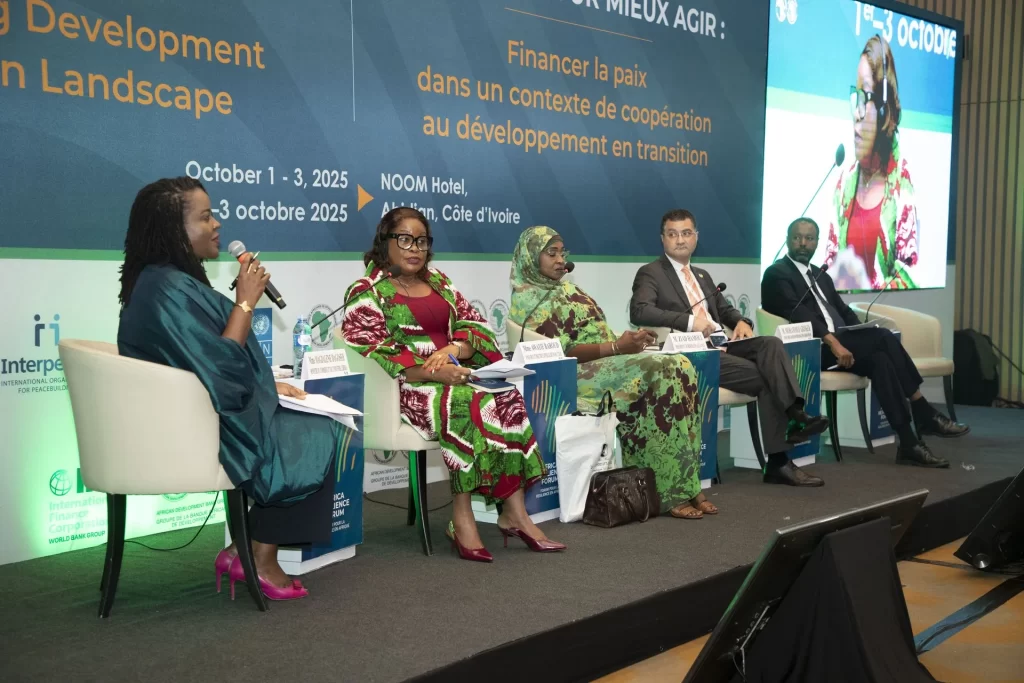
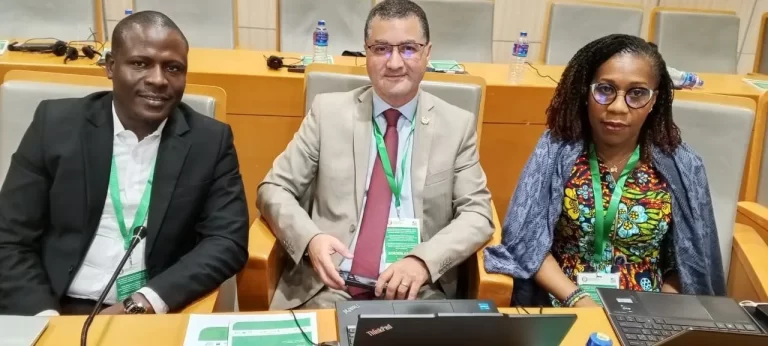
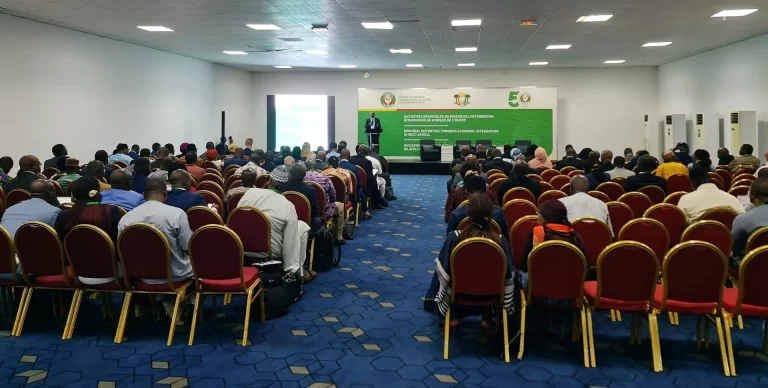
The sixth edition of the Africa Resilience Forum opened in Abidjan on 1 October 2025 under a theme that reads as both a warning and an instruction: ‘Prioritizing Prevention: Financing Peace in a Changing Development Cooperation Landscape.’ Over the three days that followed, at the NOOM Hotel, the African Development Bank Group’s flagship gathering on fragility and resilience brought together policymakers and practitioners for a conversation that, for once, treated conflict prevention as an economic question as much as a security one.
The Forum’s central premise is deceptively simple: scaling up peace-positive investment across the continent is cheaper, in every sense, than responding to conflict after it erupts. Held every two years by the African Development Bank Group, the Africa Resilience Forum exists to bring the humanitarian, development, and peace communities into the same room, three sectors that have historically operated on separate tracks, funded separately, staffed separately, and reporting separately, despite working on overlapping problems in the same fragile places.
This year’s discussions ranged widely across the priorities that determine whether prevention actually works: private sector engagement, youth economic resilience, food security, climate financing, trade and regional integration, and the fast-emerging question of what role artificial intelligence and frontier technologies might play in either stabilising or destabilising fragile economies. That trade and regional integration featured explicitly on this list is precisely why Borderless Alliance had a seat at the table.
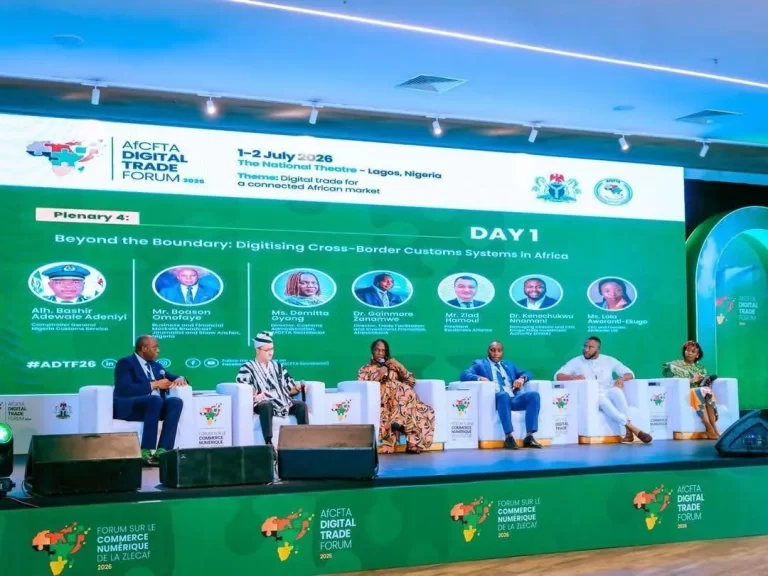
Ziad Hamoui, National President of Borderless Alliance, used his platform at the Forum to make an argument that runs through much of the organisation’s work but rarely gets framed in the language of peace and security: that civil society needs to be involved in designing the public policies that govern how people and goods move across borders. Without that involvement, he argued, policy risks being built on an incomplete picture of what is actually happening at the frontier.
Hamoui’s remarks drew a distinction that anyone who has spent time at a West African border crossing would recognise immediately. ‘There is formal trade, but also informal trade, not to mention illicit trade and smuggling,’ he told the Forum. It is a distinction easily lost in policy documents that speak of ‘cross-border trade’ as a single category, when in practice it splinters into several parallel economies, each operating under different rules, different risks, and different relationships to the state.
He went further, offering a figure that reframes how the entire policy conversation ought to proceed: ‘Today, the volume of trade in the informal sector is higher than in the formal sector. So if you don’t know what’s going on at the borders, you won’t know how to manage it.’ The observation cuts against a persistent tendency in trade policy circles to design interventions around formal trade data, while the larger, informal share of cross-border commerce goes largely unmeasured and, consequently, unmanaged.
That argument connects directly to the Forum’s prevention theme in a way that might not be immediately obvious. Borders where the state has poor visibility into what is actually moving across them, and poor relationships with the people doing the moving, are borders more vulnerable to the kinds of grievance, informality, and unregulated economic activity that can, over time, feed instability. Involving civil society in policy design is, in this framing, not a matter of process fairness but a practical prevention tool.
The Forum’s setting in Abidjan carried its own significance. Côte d’Ivoire sits at one end of the Abidjan-Lagos Corridor, a route whose performance depends on exactly the kind of cross-border cooperation and civil society engagement that Hamoui was advocating for, making the venue an apt backdrop for an argument grounded in the daily reality of West African trade corridors rather than abstract policy principle.
Convening policymakers and practitioners from across the humanitarian-development-peace nexus, as the Forum describes its own audience, meant Borderless Alliance’s trade-focused perspective was placed in direct conversation with actors more typically associated with conflict prevention, refugee response, or peacebuilding programming. That cross-pollination is arguably the Forum’s core value: it forces trade facilitation advocates to think about their work’s security dimensions, and forces security and peacebuilding practitioners to reckon with how much of fragility’s underlying economics runs through informal trade.
As the sixth edition since the Forum’s founding, the Abidjan gathering added to a growing body of continental consensus around scaling up prevention financing rather than waiting for crises to justify emergency response. For Borderless Alliance, participation offered a platform to ensure that as that consensus builds, the specific realities of West African border trade, formal and informal alike, remain part of how ‘prevention’ actually gets defined and funded going forward.