
A Decade of Counting: The Africa Visa Openness Index Marks Ten Years
On 12 December 2025, the African Development Bank and the African Union Commission officially launched the tenth edition of the Africa Visa Openness Index, a moment that carried the particular weight anniversaries do: an occasion not just to release a new year’s data but to look back across ten years of evidence and ask what, if anything, has actually changed for the people trying to move across African borders.
For a decade, the two institutions have jointly produced the Index as a critical report tracking trends in visa-free access for Africans travelling across their own continent, a statistic that sounds almost absurd stated plainly, that African citizens have historically needed more paperwork to visit neighbouring African countries than many non-African visitors, yet remains stubbornly true across large parts of the continent even now.
The tenth edition’s findings offer a genuinely mixed verdict. Visa-free travel scenarios have risen by 40 percent over the decade, climbing from 20 percent of intra-African travel in 2016 to 28 percent by 2024, alongside a broader trend of more countries offering e-visas or visas on arrival, improvements particularly visible in West and East Africa. Progress, in other words, is real and measurable, not merely rhetorical.
Set against that progress sits a harder finding: even as visa-free scenarios climbed to 807 recorded instances continent-wide, the share of visa-required regimes simultaneously rose to 51.4 percent. Two trends moving in opposite directions at once is an uncomfortable but honest picture, one that resists the easy story of steady, linear improvement and instead suggests a continent where openness and restriction are advancing on parallel, sometimes competing, tracks.
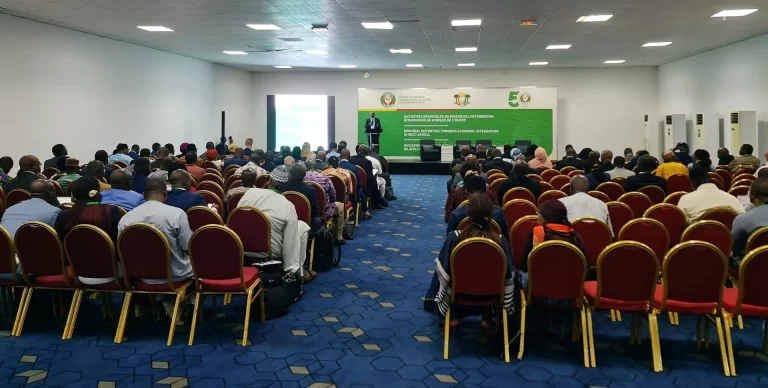
The launch ceremony itself gathered a genuinely broad cross-section of the actors with a stake in this question: representatives of regional organisations, the private sector, civil society, academia, and youth networks, brought together for a panel session and an interactive Q&A that allowed the room, not just the podium, to shape the conversation. The breadth of that audience reflects a growing understanding that visa policy is not a purely diplomatic or immigration matter but touches trade, tourism, education, and labour markets all at once.
One thread that ran consistently through the discussion was the importance of telling a better story about free movement’s role in promoting and accelerating economic development across the continent. Data alone, however carefully compiled over ten years, rarely shifts policy on its own; participants recognised that the numbers behind the Africa Visa Openness Index need a compelling narrative attached to them if they are to move the political needle on visa liberalisation.
That narrative gap connects directly to a recurring theme in the day’s conversation: the persistent disconnect between commitments made at the continental level, chiefly the African Union’s Free Movement Protocol, and the messier reality of implementation at the national and regional level. Panelists called for more coordination between national, regional and continental authorities, alongside deeper collaboration with civil society, private sector, and media, to close that gap.
Part of that coordination, participants argued, means adopting best practices from regions where the Free Movement Protocol has genuinely worked, while honestly confronting the lessons from regions where implementation has stalled or failed, rather than treating every regional bloc’s experience as equally instructive. Aligning the Protocol with existing regional protocols, ECOWAS’s own free movement framework among them, was raised as a specific, practical step rather than an abstract aspiration.
For Borderless Alliance, whose daily advocacy work concerns exactly the kind of border friction the Index measures at a statistical remove, the tenth anniversary launch offered both validation and a challenge. Validation, in that ten years of data now confirm what the organisation has long argued from ground-level observation: that Africa’s internal mobility remains far more restricted than its stated commitments suggest. And a challenge, in that the persistent rise in visa-required regimes shows how much work remains even after a decade of tracking the problem.
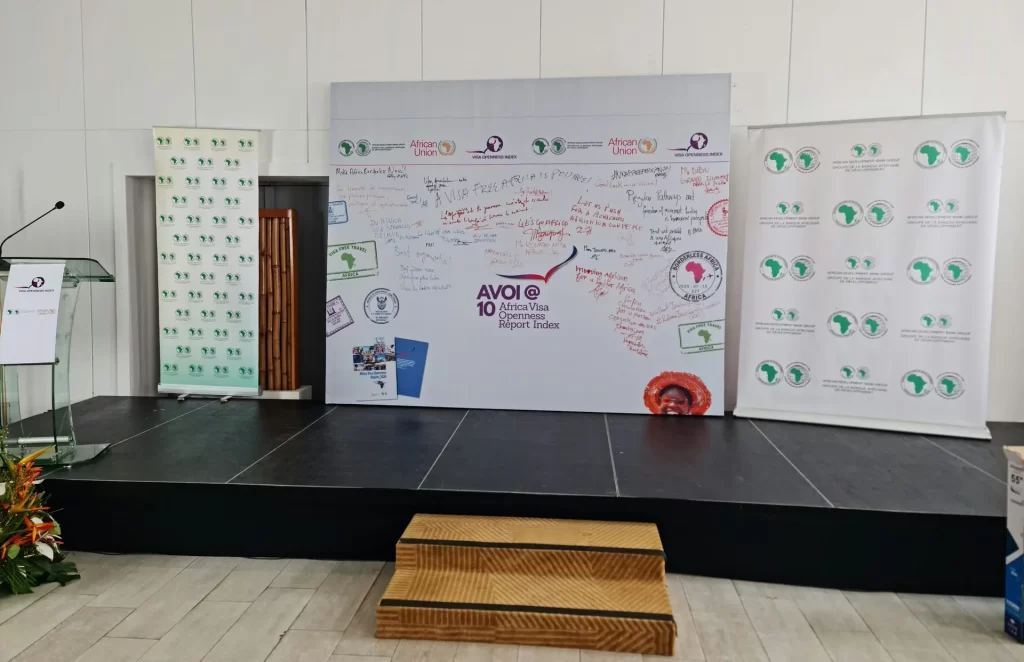
A memorable, informal footnote from the day captured the spirit of the anniversary better than any statistic could: guests were invited to add their own message to a pledge wall at the venue, and among the handwritten notes, in red marker, was one reading simply, ‘Let us push for a borderless Africa.’ Ten years into measuring the distance between Africa’s free movement ambitions and its border realities, that handwritten line served as a fitting, unofficial epigraph for the Index’s second decade.