
Building the Foundation: Ghana’s National Trade Facilitation Committee Convenes at Sogakope
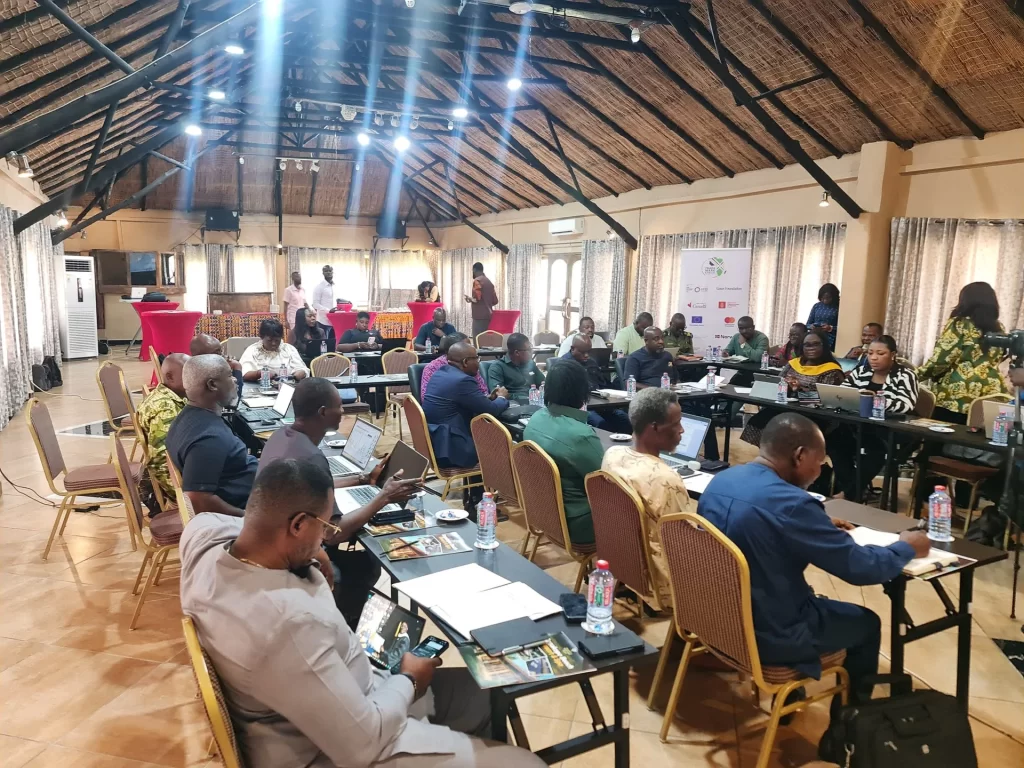
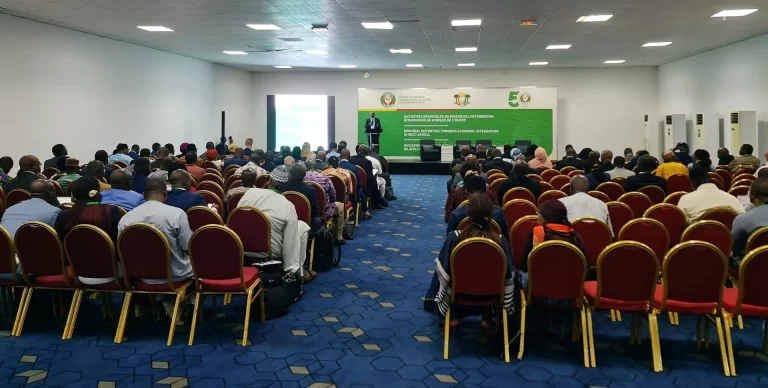
The riverside setting of Sogakope Beach Resort, its thatched roof and open sightlines a world away from Accra’s conference hotels, hosted what organisers described as the first NTFC Meeting of Ghana on 9 and 10 March 2026, a gathering whose ambitious agenda belied the relaxed venue. Despite Ghana’s National Trade Facilitation Committee having convened multiple times in preceding years, this session was framed as foundational, tasked with establishing structures the committee had operated without until now.
Chief among these was the objective of developing a standard operating procedure for perishable goods, a gap with real consequences for Ghanaian traders. Perishable commodities, fresh produce, seafood, certain agricultural exports, face a fundamentally different risk profile at borders than manufactured goods: every hour of delay directly erodes the value and safety of the shipment, in ways a delayed container of hardware or textiles simply does not experience. A dedicated standard operating procedure is meant to ensure these goods receive processing appropriate to that urgency, rather than being handled under generic customs timelines.
The meeting also turned to finalizing the workplan for implementing recommendations from the Time Release Study, the same diagnostic exercise reviewed by TMA CPOC-GH and the Ghana Revenue Authority back in August 2025. That the Sogakope meeting picked up this thread seven months later demonstrates how trade facilitation reform in Ghana proceeds as a genuinely continuous process, with findings from one committee’s technical meeting feeding directly into another’s implementation planning months down the line.
Establishing the NTFC Secretariat represented perhaps the most structurally significant item on the agenda. A committee that meets periodically but lacks a standing secretariat depends heavily on the goodwill and availability of member institutions to carry work forward between sessions; a dedicated secretariat gives the NTFC institutional continuity, a body responsible for tracking commitments, preparing agendas, and ensuring that decisions made at one meeting are not simply left to drift until the next.
Designating Ghana’s National Transit Coordinator addressed a related institutional gap. Transit trade, goods moving through Ghana en route to or from landlocked neighbours, requires a coordinating function distinct from ordinary import-export processing, since it involves managing the interests and requirements of multiple countries along a single shipment’s route. Formally naming a coordinator for this role gives Ghana’s transit trade partners, and Ghana’s own agencies, a clear single point of institutional responsibility.
The meeting’s final major objective, completing submission of pending WTO Categories B and C, returned to territory familiar from the NTFC’s earlier 2025 sessions in Koforidua. Categories B and C under the WTO Trade Facilitation Agreement cover commitments that developing countries may implement after a transition period, or with the benefit of technical assistance and capacity building respectively, and completing these submissions is a matter of formally confirming to the WTO exactly which timeline and support arrangements apply to Ghana’s remaining obligations.
Taken together, these five objectives, standard operating procedures for perishables, a Time Release Study implementation workplan, a standing secretariat, a designated transit coordinator, and completed WTO notifications, represent less a single reform than an attempt to give the entire NTFC-GH structure the institutional scaffolding it had been operating without. A committee is only as effective as its supporting infrastructure, and Sogakope’s agenda was explicitly about building that infrastructure rather than simply discussing policy in its absence.
For Borderless Alliance, whose members have sat through multiple NTFC sessions across 2025 and into 2026, the Sogakope meeting’s institutional focus reflected a maturing of Ghana’s trade facilitation governance, moving from a committee that met to discuss problems toward one equipped with the standing capacity, a secretariat, a named coordinator, formalised procedures, to act on them between meetings rather than only during them.
TradeMark Africa’s continued involvement, evident throughout the venue’s branding and materials, underscored the organisation’s role as the connective tissue linking this Sogakope session to the broader arc of trade facilitation work it has supported across Ghana throughout 2025 and 2026, from the Akanu border post technical visit to the quarterly CPOC meetings to this foundational NTFC gathering.
The choice of Sogakope, a town on the Volta River rather than in Accra itself, offered the committee the kind of uninterrupted working environment that the ambitious two-day agenda demanded, echoing the earlier decision to hold the March 2025 NTFC retreat in Koforidua. As Ghana’s trade facilitation institutions increasingly favour this retreat format for their most consequential sessions, a pattern emerges: the country’s most structurally significant trade facilitation decisions are, more often than not, being made away from the capital.