
A Ghanaian Voice on Women’s Trade: Ziad Hamoui at the UN/FAO Regional Forum
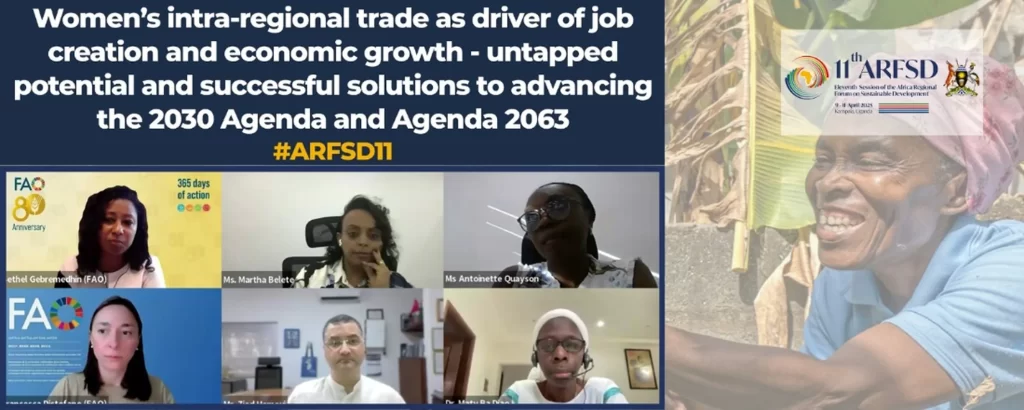
When the United Nations Food and Agriculture Organization went looking for a panelist who could speak with authority on cross-border trade from a West African vantage point, it turned to Ziad Hamoui, National President of Borderless Alliance in Ghana. The invitation placed him on a virtual side event titled ‘Women’s Intra-Regional Trade as a Catalyst for Job Creation and Economic Growth,’ convened during the 11th African Regional Forum for Sustainable Development, held in hybrid format in Kampala, Uganda, on 8 April 2025.
The African Regional Forum for Sustainable Development is one of the continent’s central mechanisms for tracking progress on the UN’s Sustainable Development Goals, bringing together governments, UN agencies, and civil society to assess how Africa is faring against global development targets. That FAO chose to host a side event specifically on women’s intra-regional trade within this larger gathering reflects a growing recognition that gender and trade cannot be treated as separate policy conversations if either is to succeed.
Women’s intra-regional trade is not a marginal phenomenon in West Africa; it is a defining feature of the region’s commercial life. Across borders like the ones Borderless Alliance monitors daily in Ghana, women make up a substantial share of the traders moving foodstuffs, textiles, and household goods from one country to the next, often in the informal sector where data is scarce but economic weight is unmistakable. A panel on this subject was never going to be abstract for someone in Hamoui’s position.
Hamoui’s contribution drew on Borderless Alliance’s years of direct engagement at West African border crossings, where the organisation has documented the specific frictions that make cross-border trading harder for women than for men: informal levies, harassment, inconsistent treatment by officials, and a lack of facilities designed with women traders in mind. Bringing that ground-level evidence into a UN-convened forum is precisely the kind of translation work that gives international policy discussions practical grounding.
The panel’s framing of trade as a catalyst for job creation and economic growth reflects a deliberate argument that gender equity in trade is not simply a matter of fairness but of economic efficiency. When women traders face higher costs and more delays than their male counterparts for moving identical goods, the aggregate effect is a less efficient regional market, one where capable entrepreneurs are held back by frictions that have nothing to do with the value of what they are selling.
For Borderless Alliance, this kind of engagement extends the organisation’s advocacy footprint well beyond West Africa’s physical borders. The Alliance is fundamentally rooted in the day-to-day reality of trade corridors in Ghana and its neighbours, but issues like gender and trade facilitation are regional and continental in scope, and a hybrid forum hosted from Kampala offered a platform to connect Ghana-specific experience with the wider African policy conversation on sustainable development.
The hybrid format itself is worth noting as a practical matter. Enabling participation without requiring international travel meant that Hamoui could contribute to a Kampala-based forum from Ghana, a small but real illustration of how digital connectivity is reshaping which voices get heard in continental policy discussions, particularly for civil society and private sector representatives who might otherwise be excluded by the cost and time of travel.
The panel’s proceedings were subsequently documented by FAO, with the organisation publishing coverage of the session that captured the discussion’s core themes around women’s trade as a driver of job creation and economic growth. That kind of institutional documentation matters because it ensures the arguments raised, including those grounded in Borderless Alliance’s field experience, remain part of the accessible record for policymakers and researchers working on gender and trade issues going forward.
The broader context for this engagement is the African Continental Free Trade Area, which explicitly recognises the need for gender-responsive implementation if its promised benefits are to reach women traders and not just larger, formal-sector exporters. Panels like this one, connecting UN sustainable development processes to AfCFTA’s ambitions, help keep gender considerations from being treated as an afterthought bolted onto trade policy rather than built into it from the start.
Hamoui’s participation in Kampala is one entry in a longer pattern for Borderless Alliance, whose leadership regularly appears on international platforms to represent the practical realities of West African cross-border trade. Each such appearance carries the organisation’s grounded, evidence-based perspective into rooms, physical or virtual, where trade policy for the whole continent is being shaped, ensuring that the experience of traders on Ghana’s borders informs discussions far beyond them.