
Consulting the Region: ECOWAS Gathers Stakeholders to Shape the Future of West Africa
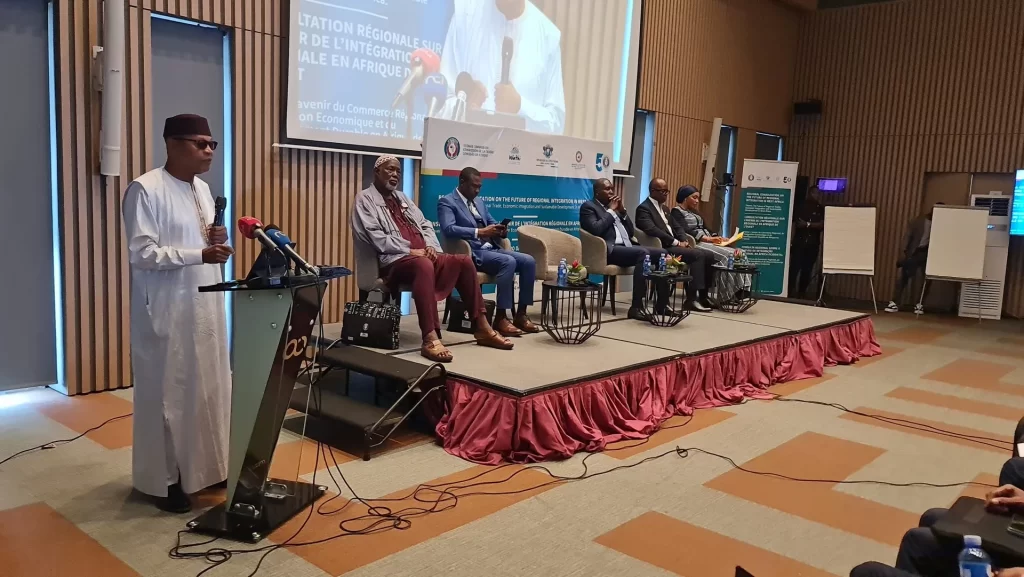
From 3 to 6 March 2026, Borderless Alliance took part in a regional consultation in Abidjan that carried an unusually forward-looking title even by the standards of ECOWAS gatherings: a stakeholder engagement on the future of West Africa, one segment of a wider consultative process feeding into what organisers billed as the Summit of the Future of West Africa.
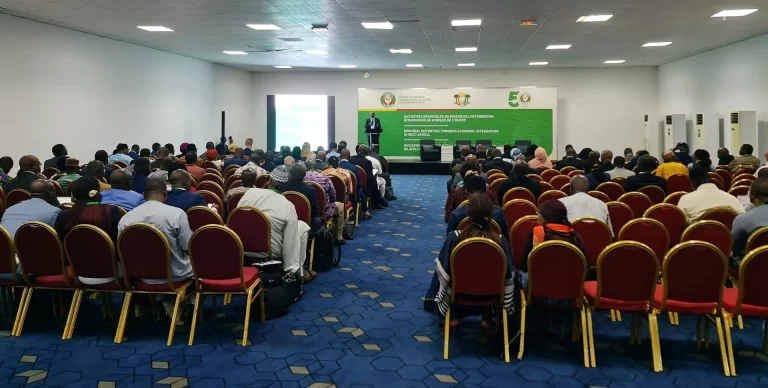
The meeting’s French-language banner, ‘Consultation Régionale sur l’Avenir de l’Intégration Régionale en Afrique de l’Ouest,’ framed the four days of discussion around a specific question: what does West African regional integration need to look like for the future, rather than simply how should it be maintained as currently designed. That distinction, between maintenance and reimagination, shaped much of what followed.
National and regional stakeholders convening in Abidjan were tasked with examining the issues bearing most directly on ECOWAS Vision 2050, the bloc’s long-term strategic framework for the region. Vision 2050 sets ambitions across economic integration and sustainable development that extend well beyond ECOWAS’s founding-era focus on trade liberalisation, encompassing questions of governance, climate resilience, and social development that a purely trade-focused body would not traditionally have addressed.
Economic integration nonetheless remained a central pillar of the four days’ discussions, and it was here that Borderless Alliance’s presence carried the most direct relevance. Panel sessions brought together voices from ECOWAS Commission representatives, military and security officials in national uniform, technical experts, and civil society figures, reflecting an unusually wide-angled approach to what ‘economic integration’ actually requires, security and governance included, rather than treating it as a narrow customs and tariff question.
Sustainable development featured as the meeting’s second major thread, discussed not as a separate track from economic integration but as an interwoven consideration, an acknowledgment that any vision for West Africa’s future extending to 2050 has to reckon with climate change, resource pressures, and demographic growth alongside more conventional trade and investment priorities.
The consultation’s location in Abidjan placed it at a genuinely central node of West African regional integration infrastructure, a fitting venue for a discussion about the region’s future given Côte d’Ivoire’s role as both an economic powerhouse within ECOWAS and a key transit point along corridors like Abidjan-Lagos that Borderless Alliance monitors closely elsewhere in its work.
For Borderless Alliance, participation in this kind of forward-looking regional consultation offered an opportunity distinct from its more typical committee and technical-meeting engagements: a chance to shape a long-term strategic vision rather than simply implement or monitor existing commitments. Where much of the organisation’s 2025 and 2026 activity involved reviewing progress against established frameworks, this engagement sat further upstream, at the point where the frameworks themselves for 2050 were still being debated.
The four-day span, running from 3 through 6 March, allowed the consultation room for genuinely substantive deliberation rather than the compressed, single-day format that many regional gatherings settle for. That extended timeframe reflected the ambition of the exercise: shaping a vision meant to guide ECOWAS integration efforts across the following quarter-century is not work that fits comfortably into a single afternoon’s agenda.
The consultation formed one component of a broader process feeding toward the eventual Summit of the Future of West Africa, meaning the discussions held in Abidjan in early March 2026 were understood by participants as contributory rather than conclusive, input to be synthesised alongside other regional consultations before reaching whatever final form the Summit itself would take.
For an organisation whose founding mission centres on the day-to-day friction of moving goods and people across West African borders, engagement at this level, helping to shape a fifty-year regional vision, represents a deliberate effort to ensure that the practical realities Borderless Alliance observes at border posts and along trade corridors inform West Africa’s integration strategy at its most foundational, long-horizon level, not only in the implementation details that follow years later.