
Eight Years of Watching the Border: The ETLS Task Force Marks a Milestone in Abidjan
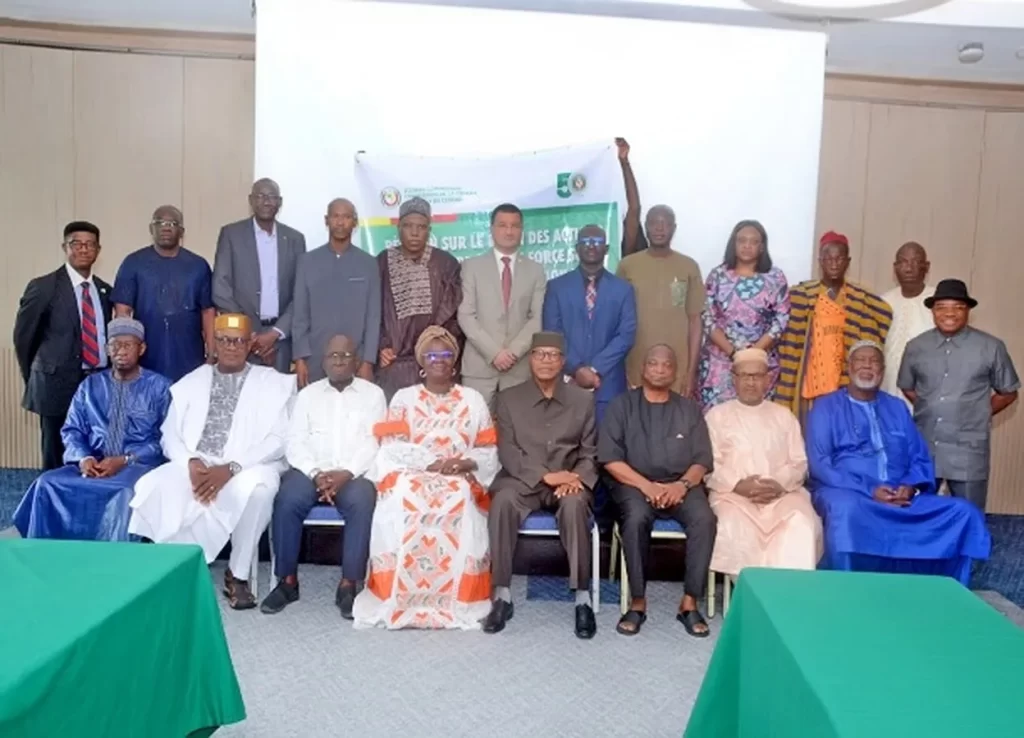
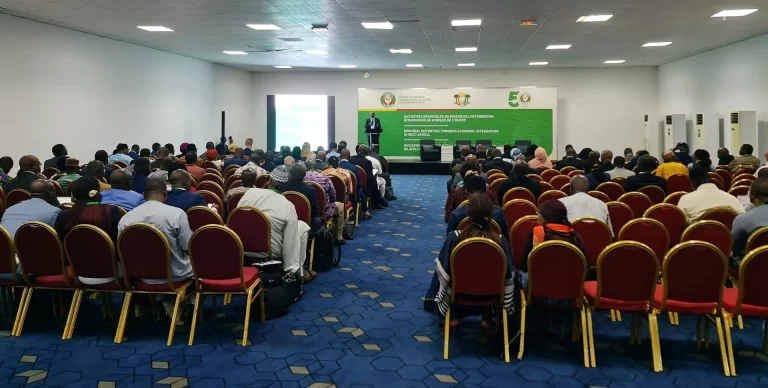
For three days at the Ivotel in Abidjan, from 1 to 3 July 2025, the ETLS Task Force gathered for a retreat unlike its usual sittings, one built specifically to take stock of eight years of continuous activity monitoring the state of free movement of goods and people across ECOWAS territory. Anniversaries of this kind are rare in institutional life, and the Task Force used the occasion not for celebration alone but for a genuine audit of what eight years of monitoring had actually achieved.
ETLS, the ECOWAS Trade Liberalisation Scheme, is the mechanism through which goods originating within the ECOWAS region are meant to move between member states without tariffs, one of the bloc’s foundational tools for regional economic integration. The Task Force exists to monitor whether this promise holds up in practice, tracking the countless points, official and unofficial, where free movement can be obstructed despite the formal rules guaranteeing it.
Borderless Alliance’s relationship with the ETLS Task Force is not that of an occasional guest but of a technical partner, a designation that reflects sustained, substantive engagement over years rather than episodic attendance. The organisation’s National President in Ghana has actively participated in three of the Task Force’s previous missions within the country, giving Borderless Alliance direct, repeated visibility into how ETLS actually functions, or fails to, at Ghana’s own borders.
That involvement stretches back further still, to the Task Force’s very first retreat, held in Ouagadougou in February 2020. Borderless Alliance’s presence at that founding gathering and its continued participation through to the eight-year milestone retreat in Abidjan traces a rare through-line of institutional continuity, the kind that allows an organisation to speak credibly about how a monitoring mechanism has evolved rather than offering only a snapshot impression.
The Abidjan retreat drew participation from both current and previous Task Force members, alongside representatives from the technical and institutional partners who support its work. Bringing former members back into the room alongside current ones is a deliberate way of preserving institutional memory, ensuring that lessons learned in earlier years of monitoring are not lost simply because personnel or organisational representation has changed over time.
Eight years of monitoring free movement of goods and people across ECOWAS territory generates an enormous amount of accumulated evidence: patterns of non-tariff barriers, recurring chokepoints, the persistence or resolution of specific obstructions flagged in earlier missions. The retreat’s task was to synthesise this evidence into an honest assessment, distinguishing between areas where genuine progress had been made and those where the same problems documented years earlier remained stubbornly in place.
Free movement across ECOWAS territory sits at the heart of the region’s economic integration project, and its practical implementation has always lagged behind its legal commitments. The ETLS Task Force’s monitoring work exists precisely to narrow that gap, documenting where implementation falls short so that member states and ECOWAS institutions cannot simply assume the scheme is functioning as designed without evidence to support that assumption.
For Borderless Alliance, the eight-year retreat offered a rare opportunity to connect Ghana-specific observations, drawn from the National President’s three missions within the country, to the broader regional pattern the Task Force had documented across all of ECOWAS. Individual country missions can reveal local specifics, but it is only in a synthesising retreat like this one that those specifics get compared against the experience of other member states to reveal what is genuinely a regional pattern versus what is a Ghana-specific issue.
The choice to hold this milestone retreat in Abidjan, rather than in Ouagadougou where the Task Force’s work began, reflected both practical and symbolic considerations: Côte d’Ivoire’s own significance as an ECOWAS economic hub and the Task Force’s evolution beyond its founding location into a genuinely region-wide monitoring body. The retreat’s outputs would go on to inform the Task Force’s approach to its work in the years following the eighth anniversary.
Looking back over eight years from the vantage point of Abidjan in 2025, the retreat underscored a truth that runs through much of Borderless Alliance’s broader work: sustained, technical monitoring, unglamorous and rarely making headlines, is what actually holds regional trade commitments accountable over the long run. Anniversaries offer a moment to make that quiet persistence visible, but the underlying work continues in the same understated way well beyond the retreat itself.