
West Africa’s Chambers Convene: The FEWACCI Summit Comes to Accra
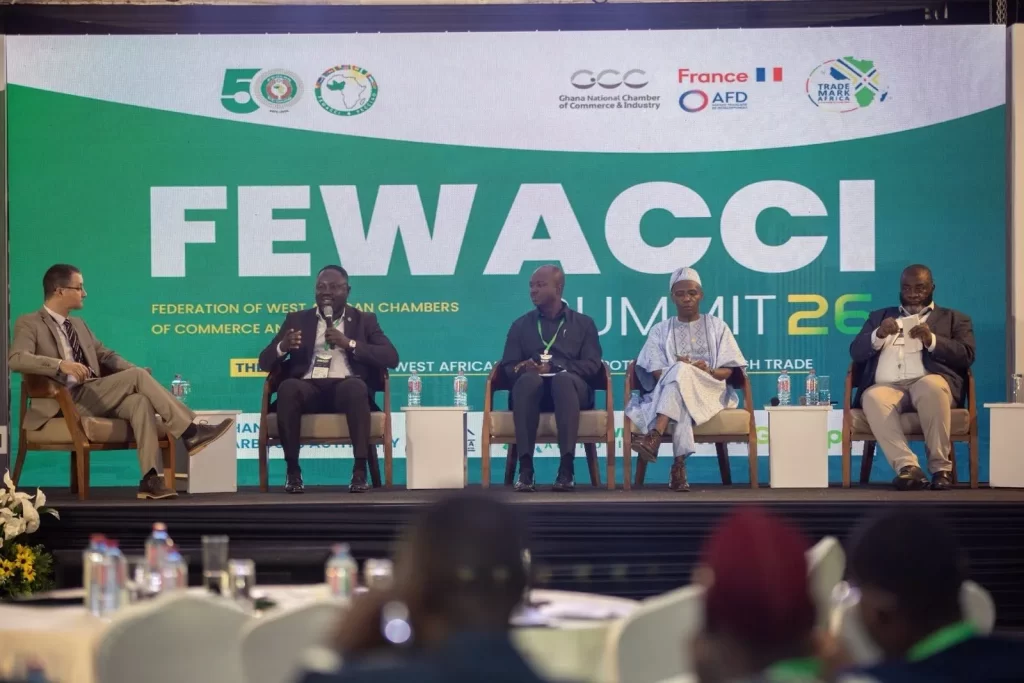
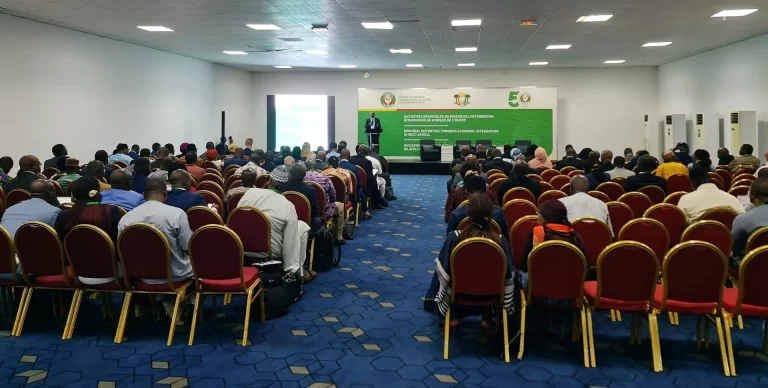
The Ghana National Chamber of Commerce and Industry took on hosting duties for the 2026 Summit of the Federation of West African Chambers of Commerce and Industry, better known by its acronym FEWACCI, bringing the gathering to Accra on 24 and 25 March 2026. Under a stage marking FEWACCI’s fiftieth anniversary and flanked by the logos of the Ghana National Chamber, France’s AFD development agency, and TradeMark Africa, the Summit assembled a genuinely broad coalition of West Africa’s private sector leadership.
FEWACCI exists as the regional umbrella for national chambers of commerce across West Africa, a structure that gives the private sector a collective, cross-border voice in trade policy discussions that might otherwise be dominated entirely by governments and multilateral institutions. A fiftieth anniversary summit carries particular institutional weight, marking half a century of the region’s business community organising itself to speak with a shared voice on trade and economic matters.
The Summit’s stated purpose, bringing together private sector leaders, government ministers, development partners, and regional institutions, reflects an ambition to advance a shared agenda for West Africa’s economic transformation, framing the two-day gathering not merely as a networking opportunity for chamber officials but as a genuine forum for cross-sector alignment on the region’s economic direction.
Panel discussions held under the Summit’s banner tackled the practical realities of trade in the region head-on. One session brought together voices, including Borderless Alliance representation, alongside participants such as Erick Sirali, Maximiliano Mendez of CCI Global, and government representation from Burkina Faso’s Ministry of Trade and Industry, addressing regional trade dynamics from multiple national and institutional vantage points at once.
Ghana’s hosting role placed the country’s own private sector institutions, the Ghana National Chamber of Commerce chief among them, at the centre of a genuinely regional conversation, a positioning that reflects Ghana’s broader ambition to serve as a hub for West African trade and commerce, an ambition that runs through much of the trade facilitation infrastructure work documented elsewhere in this catalogue, from corridor development to border post modernisation.
The private sector focus of the Summit distinguishes it from the more government- and institution-led gatherings that populate much of the regional trade calendar, such as ECOWAS Commission meetings or WTO ministerial conferences. FEWACCI’s structure ensures that the businesses actually engaged in cross-border trade, exporters, importers, logistics operators, manufacturers, have a dedicated platform to shape the policy conversation rather than simply responding to decisions made elsewhere.
Development partner presence, visible through France’s AFD and TradeMark Africa’s sponsorship branding on the summit stage, situates FEWACCI’s fiftieth anniversary gathering within the broader ecosystem of donor-supported trade facilitation work that runs throughout West Africa’s regional integration efforts, connecting a private-sector membership body to the international development financing that increasingly underwrites much of the infrastructure and capacity building those businesses depend on.
For Borderless Alliance, participation in the FEWACCI Summit connects the organisation’s advocacy directly to West Africa’s formal private sector apparatus, complementing its engagement with government-led trade facilitation committees like Ghana’s NTFC and TMA CPOC-GH. Where those committees give Borderless Alliance a voice in implementation and technical detail, FEWACCI offers a platform among the region’s business leadership itself, a different but equally important audience for the organisation’s advocacy.
The Summit’s timing, held roughly a fortnight after the Akanu-Noepe border post handover and just days before Ghana’s National President would travel to Yaoundé for the WTO’s 14th Ministerial Conference, placed FEWACCI within an unusually dense stretch of March 2026 activity, one that carried Borderless Alliance’s leadership from a border ceremony in the Ghana-Togo borderlands to a fiftieth-anniversary regional business summit in Accra within the span of little more than a week.
Fifty years into its existence, FEWACCI’s continued convening power, sufficient to draw government ministers, development partners, and regional institutions to Accra alongside its core chamber of commerce membership, speaks to the durability of organised private-sector advocacy as a force in West African economic policy. Borderless Alliance’s presence at the anniversary summit placed the organisation within that half-century tradition of business-led regional engagement, even as its own specific focus on cross-border trade facilitation represents a more recent, complementary strand of that broader advocacy landscape.