
Strengthening a Partnership: Borderless Alliance Moderates at the 3rd Ghana-EU Business Forum
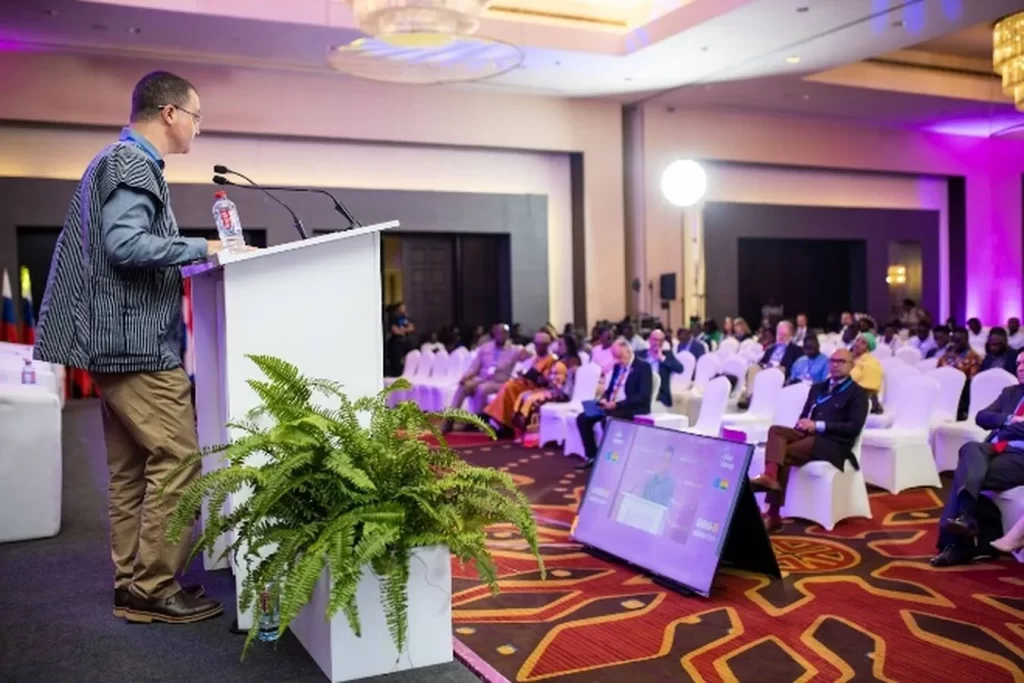
The Kempinski Hotel in Accra played host, on 20 and 21 May 2025, to the third edition of the Ghana-EU Business Forum, a gathering that has steadily become one of the more substantive venues for examining the commercial relationship between Ghana and the European Union. Borderless Alliance’s role went beyond simple attendance: the organisation moderated the first plenary session of Day One, placing it directly in charge of shaping the forum’s opening conversation.
The plenary’s topic, ‘Strengthening the Ghana-EU Trade and Investment Partnership in the context of the New Government’s objectives,’ situated the discussion at a genuinely consequential moment. A change in government inevitably raises questions for foreign partners and investors about continuity: which policies will persist, which priorities will shift, and what that means for commitments already underway. Moderating a session built around exactly that uncertainty required steering a conversation that touched policy, diplomacy, and commercial confidence all at once.
Ghana’s trade relationship with the European Union is layered and long-standing, spanning preferential trade arrangements, development cooperation, and a substantial base of European investment across sectors from agribusiness to manufacturing. A forum bringing together representatives of both sides exists to keep that relationship responsive to changing circumstances rather than running on inertia, and the choice of theme for the opening plenary reflected an explicit acknowledgment that circumstances had, in fact, changed.
As moderator, Borderless Alliance’s task was to draw out substantive engagement from panelists representing government, the private sector, and likely EU institutional interests, rather than allowing the session to default to prepared remarks read past each other. A well-moderated plenary forces claims to be tested and follow-up questions to be asked, turning what could be a series of parallel statements into an actual exchange about how the new government’s objectives intersect with, or diverge from, the priorities of European partners and investors.
The forum’s broader significance lies in what it reveals about how Ghana is positioning itself commercially at a moment of political transition. New governments typically arrive with their own economic priorities, and a business forum held early in a new administration’s tenure offers foreign partners an early, relatively low-stakes opportunity to hear directly how those priorities will affect existing and prospective trade and investment relationships, rather than waiting to find out through policy announcements after the fact.
For Borderless Alliance, moderating this session extended the organisation’s role beyond its usual focus on physical trade facilitation, borders, corridors, and customs procedures, into the realm of investment climate and bilateral commercial diplomacy. The two domains are connected in practice: a smoother customs process matters less to a European investor deciding where to locate a facility if the broader partnership underpinning market access feels uncertain, and vice versa.
The venue and format, a business forum rather than a government-to-government summit, meant the audience skewed toward the private sector on both sides: Ghanaian firms with EU trading relationships, and European companies with existing or prospective interests in Ghana. Borderless Alliance’s moderation therefore had to keep the conversation grounded in the practical concerns of businesses navigating the partnership day to day, rather than letting it drift into purely diplomatic abstraction.
Trade and investment partnerships of this kind rarely hinge on a single forum, but each successive edition builds a track record and a set of relationships that make subsequent cooperation easier. This being the third edition suggests the Ghana-EU Business Forum has established itself as a recurring fixture rather than a one-off event, giving both sides a predictable annual opportunity to recalibrate the partnership against current political and economic realities.
Borderless Alliance’s involvement also reflects the organisation’s standing within Ghana’s business advocacy community as a credible convener, one trusted to moderate a session with this much riding on it rather than simply attend as one voice among many. That standing is built cumulatively, through the kind of committee work, technical engagement, and border-level advocacy the organisation carries out across dozens of less visible meetings throughout the year.
As the first plenary of a two-day forum, the session Borderless Alliance moderated set the tone for what followed on Day One and into Day Two, framing the entire event around the question of how continuity and change in Ghana’s governance would shape its most significant bilateral trade and investment relationship outside the immediate West African region. It is precisely the kind of framing role that reflects the organisation’s growing weight in shaping not just how trade happens, but how it gets discussed.