
A Rolling Mandate: Three Quarters of TMA CPOC-GH Oversight, October 2025 to May 2026
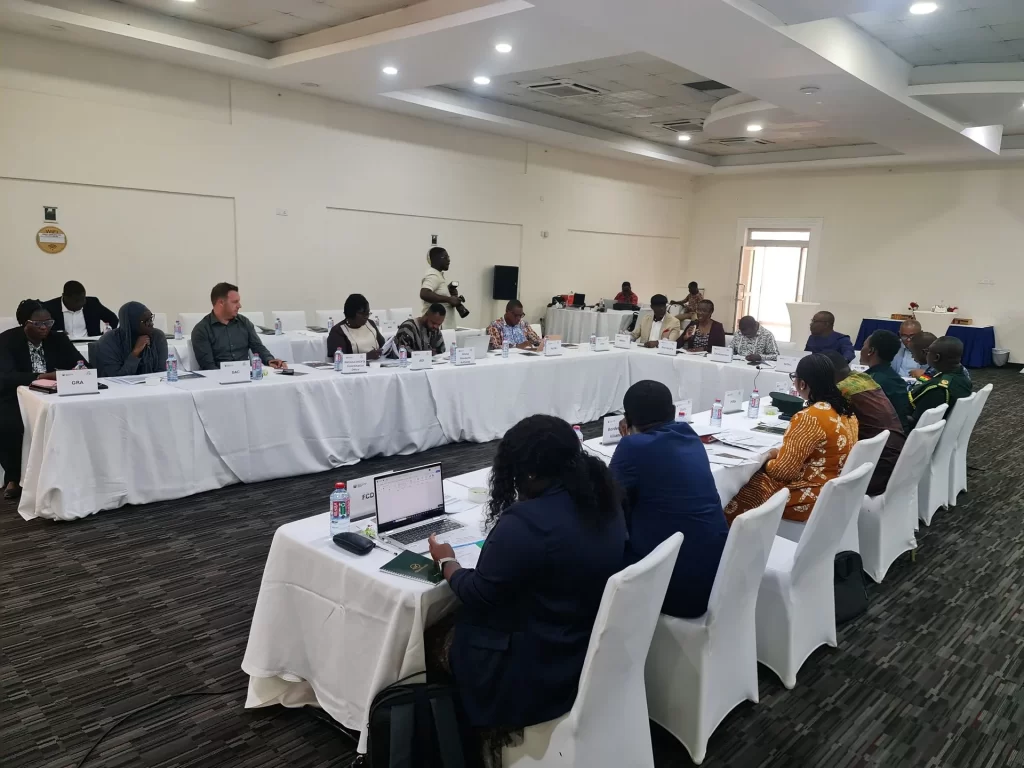
Institutional accountability rarely announces itself with fanfare, and the steady rhythm of TradeMark Africa’s Country Programme Oversight Committee for Ghana is a case in point. Across the ten-month span between October 2025 and May 2026, TMA CPOC-GH convened three times, on 9 October 2025, 5 February 2026, and 21 May 2026, each meeting organised by TradeMark Africa to take stock of its ongoing activity in Ghana over the preceding year.
Borderless Alliance’s continued membership on this committee places it among the institutions responsible for ensuring that a successful execution of TradeMark Africa’s outstanding activity actually happens, rather than simply being reported as intended. The committee’s remit spans three interlocking areas: trade facilitation, border support, and capacity building, each of which requires its own kind of scrutiny and each of which affects the others in ways that make isolated review insufficient.
The 6th, 7th, and 8th quarterly meetings, as this trio is numbered within the committee’s ongoing sequence, followed a well-established pattern that has defined TMA CPOC-GH’s work since its inception: a structured review of what TradeMark Africa’s Ghana programme achieved in the preceding quarter, an honest accounting of what fell behind schedule, and a forward-looking discussion of priorities for the quarter ahead. That pattern’s consistency is, in a sense, the entire point.
Trade facilitation reform of the kind TradeMark Africa pursues in Ghana does not move in dramatic leaps. It advances through incremental adjustments to customs procedures, gradual infrastructure completion at border posts, and capacity-building programmes that take months to show measurable results. A committee meeting every quarter, rather than annually, is what allows problems to be caught and corrected while they are still small, rather than discovered only once a full year’s drift has accumulated.
Border support, one of the three pillars under the committee’s oversight, connects this quarterly cycle directly to the physical realities documented elsewhere in Borderless Alliance’s activity during this period, including the technical visits and infrastructure milestones at crossings like Akanu-Noepe. The committee’s review function ensures that progress, or its absence, at specific border posts gets folded into the broader institutional record rather than remaining scattered across separate, uncoordinated reports.
Capacity building, the third pillar, is often the least visible of the three to outside observers, since it produces trained officials and strengthened institutional processes rather than physical structures or headline agreements. Quarterly review is particularly important here, since capacity-building outcomes, unlike a completed building or a signed protocol, can be difficult to verify without the kind of sustained, structured check-in that TMA CPOC-GH provides.
For Borderless Alliance, sitting through three of these quarterly sessions across less than a year underscores how much of the organisation’s actual influence over trade facilitation outcomes in Ghana is exercised through this kind of sustained committee presence, rather than through the more visible summit appearances and panel discussions that populate much of its public-facing calendar. The two modes of engagement are complementary, but the quarterly committee work is where implementation detail actually gets scrutinised.
Each of the three meetings in this cycle would have addressed its own specific set of updates, tied to whatever milestones TradeMark Africa’s Ghana programme reached in the preceding quarter, from border infrastructure progress to standards and capacity-building initiatives running in parallel elsewhere in the country. The committee’s structure allowed these varied strands of activity to be assessed together rather than in isolation, preserving a coherent, whole-of-programme view even as individual projects moved at different speeds.
The span covered by these three meetings, October 2025 through May 2026, also happened to coincide with a particularly dense period of trade facilitation and diplomatic activity for Borderless Alliance more broadly, encompassing everything from the Africa Resilience Forum to the AVOI launch to the ECOWAS regional stakeholder engagement. The quarterly CPOC meetings functioned, in effect, as the institutional backbone running underneath that busier, more visible surface of activity, ensuring the underlying TradeMark Africa programme stayed on track even as attention was drawn elsewhere.
What this rolling mandate ultimately demonstrates is that Ghana’s trade facilitation progress is not the product of any single reform or announcement but of continuous, quarter-by-quarter institutional maintenance, carried out by a committee whose meetings rarely make headlines precisely because their value lies in preventing the kinds of visible failures that would. Borderless Alliance’s consistent presence across all three sessions in this cycle reflects the organisation’s understanding that this unglamorous oversight work is where trade facilitation commitments are actually kept honest.